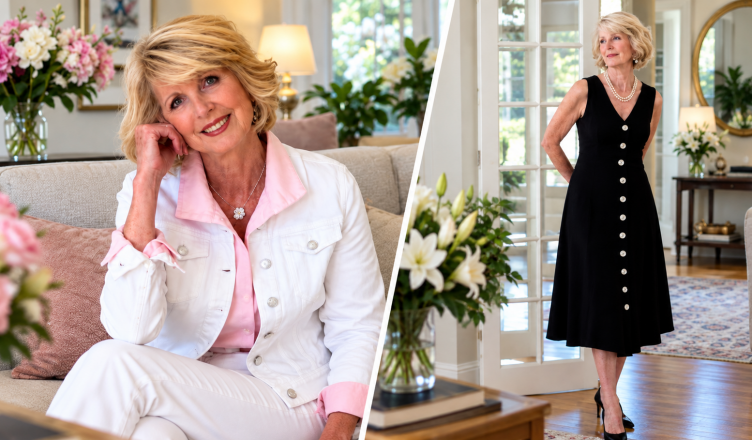
There is an unwritten rule that many women begin to encounter as they grow older: become less visible. Wear quieter colors. Choose safer clothes. Avoid anything considered too short, too fitted, too bright, or too fashionable. The expectation is rarely written down, yet it can appear everywhere—from casual remarks among relatives to comments from complete strangers.
One 75-year-old woman has found herself at the center of exactly that kind of judgment. Her clothing choices have attracted criticism from people who believe certain styles are no longer “appropriate” once a woman reaches a particular age.
Her position, however, is uncomplicated: “It’s my right to choose how I want to dress.”
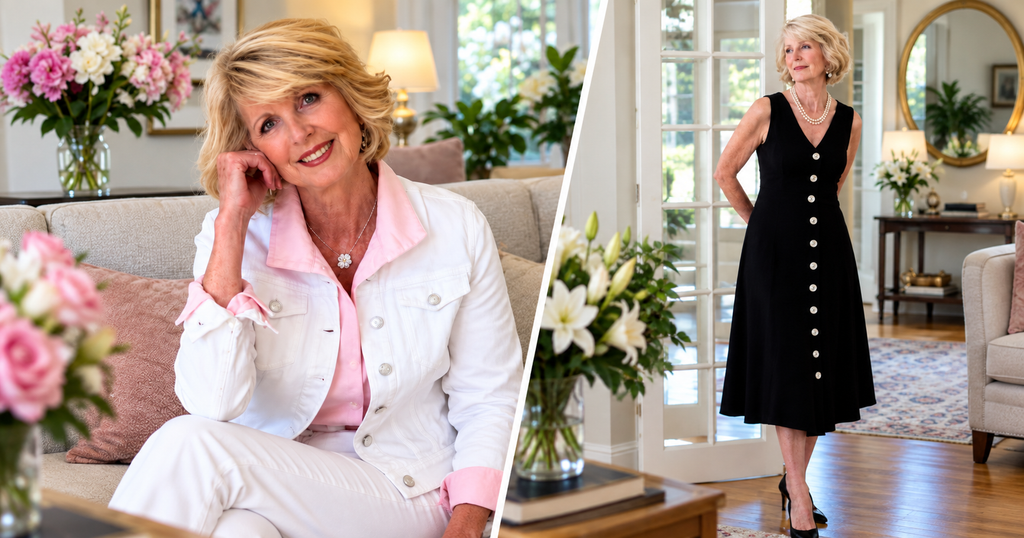
Behind that short response is a much larger question. Why should reaching a certain birthday suddenly give other people authority over a person’s wardrobe?
When Clothing Becomes an Age Issue
Fashion has always communicated more than practicality. Clothes can reflect personality, culture, profession, mood and personal taste. Yet age often changes the way the same outfit is interpreted.
A colorful or fashionable outfit on a younger woman may be described as confident or stylish. Put something similar on an older woman and the conversation can suddenly shift toward whether she is “trying too hard” or dressing “too young.”
That difference reveals something important: the criticism is often not really about the clothes.
It is about expectations.
Society has long carried assumptions about what later life is supposed to look like. Older adults are sometimes expected to become quieter and more conservative not only in their behavior but also in their appearance. For women in particular, aging has historically been accompanied by pressure to reduce rather than expand their visibility.
But personal identity does not disappear at retirement age.
Someone who enjoyed fashion at 30 may still enjoy it at 75. A person who loved bright colors throughout adulthood does not automatically develop a preference for beige because several decades have passed. Style can evolve with age, but evolution is not the same thing as surrender.
Who Decides What Is “Age-Appropriate”?
The phrase “dress your age” sounds straightforward until we try to define it.
What exactly should a 75-year-old wear?
There is no universal answer. Clothing expectations vary enormously between cultures, communities, generations and individuals. An outfit considered unusual in one place might attract no attention somewhere else.
Even within the same family, opinions can differ.
That makes “age-appropriate” a remarkably flexible concept. Sometimes it describes practical considerations such as comfort or the dress code for a particular occasion. At other times, however, it becomes a polite-sounding way of telling someone that other people are uncomfortable with their self-expression.
There is an important distinction between choosing clothing that suits a situation and believing that an adult loses the right to make personal choices because of age.
A wedding may have a dress code. A workplace may require particular clothing. Weather and safety can impose practical limits. But age alone does not create a universal uniform.
Confidence Does Not Have an Expiration Date
The woman’s response to criticism resonates because it emphasizes personal autonomy rather than asking everyone to approve of her style.
That distinction matters.
Freedom of expression does not mean everyone must like every outfit. People naturally have different tastes. Someone can dislike another person’s dress, hairstyle or shoes. Personal preference, however, is different from believing that the other person should change simply to satisfy that preference.
At 75, a woman has accumulated decades of experience making decisions about her own life. It would be strange to suggest that after all those years she suddenly requires strangers to determine whether her skirt, dress or jacket is acceptable.
For many people, clothing also contributes to confidence.
Getting dressed can be creative. Selecting an outfit can make an ordinary morning feel different. A favorite dress may carry memories, while a bold new piece may represent curiosity and an unwillingness to stop experimenting with life.
None of those experiences belong exclusively to young people.
The Double Standard Around Aging
Discussions about older women and clothing also point toward a broader double standard.
Men certainly experience age-related expectations, but women have traditionally faced particularly intense scrutiny over physical appearance. They may be told to look youthful while simultaneously being criticized if they appear to be trying to look younger.
The contradiction is difficult to escape.
Show visible signs of aging, and someone may suggest doing more to look younger. Wear fashionable clothing, and another person may accuse you of refusing to accept your age.
In other words, the standards can become impossible to satisfy because they are contradictory from the beginning.
A healthier approach may be to stop treating youth as the reference point against which every stage of adulthood must be measured.
Being 75 is not an unsuccessful attempt at being 35. It is its own stage of life, carrying its own experiences, freedoms and possibilities.
Fashion Can Change Alongside Us
Rejecting age restrictions does not mean pretending that people never change.
Bodies change. Priorities change. Comfort may become more important. Certain fabrics, shoes or cuts may become less appealing. Many people naturally modify their wardrobes as they get older.
But there is a crucial difference between changing because you want to and changing because you have been embarrassed into doing it.
Personal style can adapt without disappearing.
An older person may combine comfortable clothing with bold accessories. Someone else may continue wearing dresses similar to those she loved decades earlier. Another may completely reinvent her appearance after retirement because she finally has the freedom to dress without workplace expectations.
There is no single correct version of aging.
That may be precisely why stories about older adults challenging fashion stereotypes attract so much attention. They contradict an image of aging that many people have absorbed without consciously questioning it.
The Growing Visibility of Older Adults
The conversation is becoming increasingly relevant as people live longer and older generations remain active in public and social life.
Older adults travel, exercise, work, start businesses, use social media, pursue relationships, discover new hobbies and participate in cultural trends. Fashion is naturally part of that picture.
Social media has also made older creators more visible. Instead of seeing fashion almost exclusively through young models and celebrities, audiences can increasingly encounter people in their 60s, 70s and beyond presenting clothing on their own terms.
That visibility can challenge assumptions.
It can also remind younger audiences of something easy to forget: aging is not an unusual event happening to somebody else. For those fortunate enough to live long lives, it is a future they themselves are moving toward.
The standards society establishes for older people today may eventually become the standards younger generations encounter themselves.
Respect Does Not Require Agreement
There is another side worth acknowledging. Different generations often have genuinely different ideas about clothing. Someone raised in a more conservative environment may sincerely find certain outfits surprising.
Having that reaction is not automatically malicious.
The issue is what happens afterward.
People can hold different opinions without turning those opinions into rules for someone else. A relative may prefer traditional clothing. A friend may think another outfit would look better. A stranger online may dislike the entire style.
None of that removes the wearer’s ability to decide.
Respect does not require identical taste. It requires recognizing where another adult’s choices begin.
Growing Older Without Becoming Invisible
Perhaps the most interesting part of this story is not any particular piece of clothing. It is the refusal to accept the idea that aging should mean gradually withdrawing from self-expression.
A person does not stop having preferences because the number attached to their age changes.
At 75, someone can still enjoy beauty, attention, experimentation and individuality. She can be elegant, unconventional, glamorous, understated or anything in between. She can repeat the style she has loved for 40 years or wake up tomorrow and try something entirely different.
There is also no obligation to appear younger. Dressing freely should not become another demand to resist aging. The point is not that every older woman should wear bold clothes. The point is that she should be able to decide whether she wants to.
Some women will prefer conservative wardrobes. Others will choose dramatic fashion. Both choices deserve the same basic respect when they are freely made.
Ultimately, the statement “It’s my right to choose how I want to dress” is about something larger than fashion. It is about maintaining ownership of one’s identity.
Growing older inevitably changes many things, but adulthood does not come with an expiration date for personal choice.
Perhaps the better question is therefore not whether a particular outfit is suitable for a 75-year-old woman.
It is why, after 75 years of living her own life, anyone assumes she needs permission to wear it.