For decades, Hollywood has presented audiences with a carefully polished version of reality. Movie premieres take place under professional lighting, magazine covers are perfected before publication, and social media photos may go through several stages of editing before millions of people ever see them. Against this backdrop, an ordinary photograph can suddenly seem extraordinary.
That is why an image showing a 55-year-old woman in a natural, apparently unfiltered appearance attracted so much attention online. There was no glamorous red-carpet makeup, carefully arranged studio lighting, or the visual perfection people often associate with celebrities. Instead, viewers saw something much more familiar: a woman simply looking her age in everyday circumstances.
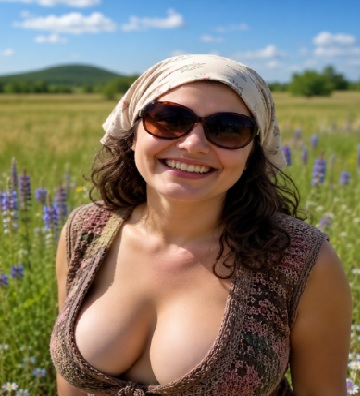
The reaction raises a much bigger question than the difference between someone’s appearance with and without makeup. Why have we become so accustomed to manufactured perfection that a natural human appearance can still surprise us?
The Difference Between an Image and Reality
Celebrity photographs are rarely as spontaneous as they may appear.
A professional portrait can involve makeup artists, hairstylists, wardrobe specialists, photographers, and lighting technicians. After the photo is taken, editors may adjust exposure, contrast, shadows, skin tones, and other visual details.
Even without extensive retouching, the combination of preparation, flattering lighting, camera angles, and careful selection of the best images can significantly influence the final result.
None of this is necessarily deceptive. Photography has always involved presentation. Actors, musicians, and other public figures are frequently photographed while promoting movies, attending major events, or representing fashion brands. Looking polished is part of that professional environment.
The problem begins when audiences unconsciously compare these professionally produced images with how people look in ordinary life.
Someone photographed under studio lighting after being prepared by a team of professionals will naturally look different from the same person captured casually in daylight.
That difference does not necessarily reveal a carefully hidden secret. More often, it simply demonstrates how powerful professional presentation can be.
Why Natural Photos Go Viral
Unfiltered celebrity photographs often spread rapidly because they create a strong contrast.
For years, audiences become familiar with public figures through movies, advertising campaigns, interviews, professional photo shoots, and carefully selected social media posts. Gradually, this polished version becomes the image people associate with that person.
When an ordinary photograph appears that looks noticeably different from the familiar image, it creates surprise.
At 55, changes in appearance are completely natural. Skin texture changes, fine lines become more visible, facial volume and contours may shift, and hair and other physical characteristics evolve.
These are normal parts of aging. Yet they can appear much more dramatic when an everyday photograph is compared with professional images specifically designed to minimize visible signs of age.
This contrast often inspires sensational headlines claiming that a celebrity has become «unrecognizable.»
In reality, the difference may not be between two completely different appearances at all. It may simply be the difference between everyday reality and professional image-making.
The Internet Magnifies Every Detail
Social media has completely transformed the way these photographs circulate.
Before modern online platforms became dominant, casual photographs of famous people usually passed through newspaper, magazine, or television editors before reaching a large audience. Today, a single image can travel around the world within hours.
Thousands of strangers can instantly comment on someone’s face, body, clothing, or age. Some reactions are supportive, while others can be extremely harsh.
The most provocative comments often receive the greatest attention. This can create the impression that everyone is shocked, even when public opinion is actually divided.
The online environment rewards dramatic interpretations.
A simple photograph of a middle-aged woman can quickly become the center of a debate about beauty, aging, cosmetic procedures, authenticity, and celebrity culture.
People may even begin speculating about someone’s health, private life, or possible cosmetic procedures without having any reliable evidence.
An important distinction needs to be made here.
A photograph can show how someone looked at one particular moment. It cannot reliably explain why they looked that way, determine whether they have undergone particular procedures, or reveal what is happening in their private life.
Without verified information, such claims remain speculation.
Hollywood’s Complicated Relationship With Aging
The fascination with natural celebrity photographs also reflects a long-standing contradiction within entertainment culture.
Audiences often say they appreciate authenticity, yet celebrities are frequently criticized when they appear naturally.
At the same time, famous people can also face criticism when others believe they have used cosmetic procedures to maintain a youthful appearance.
This creates an almost impossible standard.
Age naturally, and someone may accuse you of letting yourself go. Try to maintain a younger appearance, and someone else may criticize you for looking artificial.
Women have historically faced particularly intense scrutiny. Female actors and musicians are constantly discussed in terms of whether they look younger or older than their age. Their professional accomplishments can sometimes become secondary to conversations about appearance.
This helps explain why completely ordinary photographs can provoke such disproportionate reactions. They touch on society’s deeper anxiety about aging.
What Makeup and Lighting Can Really Do
Professional makeup involves far more than simply applying cosmetics.
Experienced makeup artists use techniques that can influence how facial structure appears on camera. Contouring emphasizes certain features. Concealer reduces the visibility of shadows and uneven skin tones. Foundation creates a more uniform complexion. Eye makeup can alter the perceived shape and proportions of the eyes.
Lighting can be equally influential.
Soft frontal lighting tends to minimize shadows and visible skin texture. Harsh side lighting can do the opposite, emphasizing wrinkles and uneven surfaces. Camera distance, lenses, and shooting angles can also change how facial features appear.
As a result, two photographs of the same person taken on the same day can look surprisingly different without either image necessarily being fake.
Modern smartphones have made the situation even more complicated. Many devices automatically process photographs by adjusting brightness, contrast, sharpness, and other characteristics. Social media platforms may then apply additional compression, processing, or filters.
For this reason, the idea of a completely «untouched» digital photograph is more complicated than it may seem.
The Pressure Extends Beyond Celebrities
There is another reason this conversation matters.
Beauty standards created around celebrities eventually influence ordinary people.
Someone scrolling through social media may compare their own reflection in a bathroom mirror with a professionally produced photograph of a famous actress. But this comparison is fundamentally unequal.
One person sees themselves under ordinary lighting, perhaps exhausted after a difficult day. The other image may represent the combined work of several professionals, with the final photograph selected from dozens or even hundreds of shots.
Social media has extended this pressure far beyond Hollywood.
Filters, editing applications, and sophisticated smartphone cameras now allow almost anyone to create an enhanced public version of their appearance.
The boundary between professional celebrity photography and everyday photography is gradually disappearing.
People are no longer simply consuming idealized images of others. They are also producing idealized versions of themselves.
Aging Is Nothing to Be Ashamed Of
Perhaps the most revealing part of the reaction to unfiltered photographs is how uncomfortable modern culture remains with visible aging.
Fifty-five is not twenty-five.
Expecting someone to remain visually unchanged across several decades is unrealistic. Yet entertainment culture repeatedly encourages exactly that expectation.
Photographs from different periods are placed side by side, inviting audiences to decide who has «aged well.» Headlines sometimes present wrinkles, gray hair, or changing facial features almost as shocking discoveries.
But aging does not mean that something has gone wrong.
A face changes with the passing years. Expressions leave traces. Skin evolves. Features mature. These processes occur regardless of fame, wealth, or professional success.
The surprising thing is not that a celebrity eventually looks older.
What is remarkable is how effectively the entertainment industry’s machinery can sometimes make audiences forget that celebrities age at all.
Authenticity Should Not Become Another Requirement
In recent years, there has been growing pressure on celebrities to appear more authentic. Public figures are often praised for sharing photographs without makeup or speaking openly about aging.
This can be positive, but even authenticity can become another social expectation.
Nobody should be required to show an unfiltered face to prove that they are honest. Wearing makeup does not automatically make someone fake, just as choosing not to wear it does not automatically make someone more genuine.
Appearance remains a personal choice.
A healthier approach is therefore not to decide which version of a celebrity is the «real» one. Both the glamorous red-carpet photograph and the casual everyday picture show the same person under completely different circumstances.
What matters is understanding how the images surrounding us are created.
Perhaps Our Surprise Says More About Us
When millions of people react strongly to a natural photograph of a 55-year-old woman, the most interesting question may not be what happened to her appearance.
Perhaps nothing unusual happened at all.
Maybe audiences are simply seeing the enormous difference between professional glamour and ordinary life.
Hollywood has spent decades perfecting the art of visual presentation. Makeup, lighting, clothing, photography, and digital technology can create remarkable images. There is nothing wrong with appreciating that artistry.
The problem begins when we forget that it is artistry.
An ordinary photograph removes some of those layers and reminds us of something very simple: behind every carefully constructed public image is a human being who grows older and changes over time.
A natural photograph therefore does not have to become a reason for shock or judgment. Instead, it can encourage us to reconsider the beauty standards we have come to accept.
Rather than asking why someone looks so different without Hollywood lighting and professional preparation, perhaps we should ask why we ever expected anyone to look as though they were being photographed for a magazine cover every minute of their life.
That question reaches far beyond a single viral image. It concerns an entire modern culture surrounded by edited faces, carefully constructed identities, and sometimes impossible standards.
And perhaps the most important thing to remember is this: looking naturally human should never be considered a scandal.