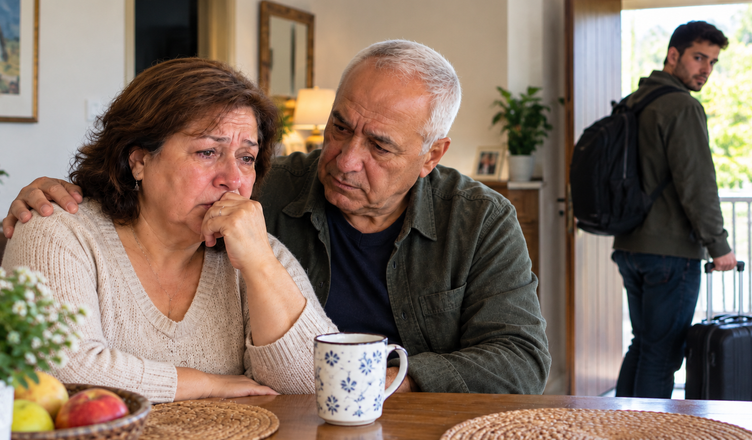
When my husband and I moved to the United States, we believed we were doing what parents had always done: building something better so our child could eventually have more choices than we had.
The first few years were difficult. We worked long hours, saved carefully, and learned how exhausting it could be to start over in a country where almost everything felt unfamiliar. But gradually, life became easier.
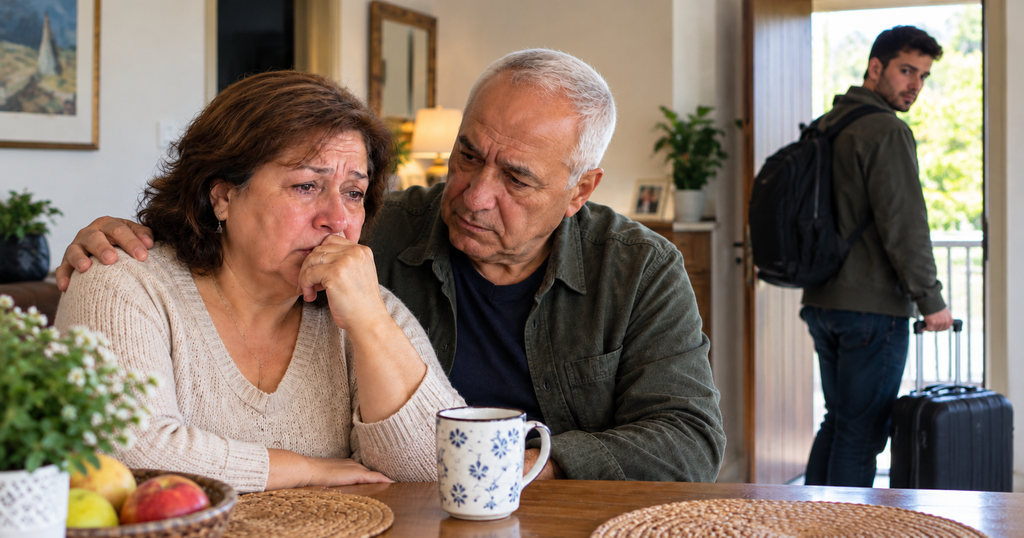
We found steady jobs. We moved from a small rented apartment into a comfortable house. We bought a reliable car, made friends, and finally reached the point where money was no longer the first thing we worried about every morning.
There was only one thing missing.
Our son, David.
He was twenty-nine and still living in the country we had left behind.
At first, this arrangement was supposed to be temporary. David had been finishing his studies when we moved, and we agreed that it made sense for him to stay until graduation. Afterward, we assumed he would join us.
But graduation came and went.
Then another year passed.
Whenever I mentioned America, David changed the subject.
“Give me a little more time, Mom.”
Later it became, “I’m fine here.”
Eventually he simply said, “I don’t want to move.”
I could never understand it.
From my perspective, we had already gone through the hardest part for him. He would not have to arrive with two suitcases and almost no money as we had. He would have a room waiting for him, people to help him adjust, and parents willing to support him while he built a new life.
I sent him photographs of our neighborhood. I told him about job opportunities. My husband even suggested helping him buy a car once he settled.
Nothing worked.
Sometimes I became angry.
“You’re throwing away an opportunity,” I told him during one of our calls.
He became quiet.
“I know you think that.”
That sentence irritated me more than an argument would have.
I thought he was being stubborn. My husband believed David was simply afraid of change. Friends told us not to worry.
“He’ll come when he gets older,” they said.
I wanted to believe them.
Then, one evening, everything changed.
David called while my husband and I were having dinner. There was something unusual in his voice. He sounded tired, but also strangely determined.
After a few minutes of ordinary conversation, I asked the question I had asked dozens of times before.
“Why won’t you come here?”
Normally he would avoid answering.
This time he didn’t.
“Do you really want to know?”
“Yes.”
“Then please don’t interrupt me.”
I put down my fork.
David reminded me of the year before our departure. My husband and I had been consumed by paperwork, money, visas, selling belongings, and making plans. Every conversation seemed to revolve around America.
We talked constantly about what we were leaving behind: unstable work, financial pressure, uncertainty.
But according to David, we rarely talked about what he was leaving behind.
His friends were there. His grandparents were there. The streets where he had grown up were there. The university he had dreamed of attending was there.
Most importantly, his grandfather had become seriously ill not long after we left.
David had quietly taken on responsibilities we barely understood from thousands of miles away. He visited his grandfather, bought groceries, dealt with doctors, repaired things around the apartment and stayed with him on difficult days.
“You kept telling me to come because I could have a better life,” David said. “But every time you said it, I heard something else.”
“What?”
“That the life I have here doesn’t count.”
I wanted to object immediately.
Of course his life counted.
Everything we had done was for him.
But I had promised not to interrupt.
Then he said the words that stayed with me long after the call ended.
“You left because you believed leaving was right for you. Why can’t staying be right for me?”
For several seconds, I couldn’t answer.
I had spent years measuring David’s future according to the sacrifices my husband and I had made. Because immigration had improved our circumstances, I had assumed it must automatically improve his.
But children do not inherit their parents’ definition of happiness.
David told me he had a job he genuinely enjoyed. The salary was not impressive by American standards, but it was enough for him. He had close friends nearby. He was in a serious relationship with a woman he had never mentioned because he feared we would immediately ask whether she was willing to move abroad.
And his grandfather depended on him.
“I’m not staying because I don’t love you,” he said. “I’m staying because there are people here I love too.”
That was the moment my anger disappeared.
In its place came something far more painful: the realization that I had been asking my son to prove his love for us by abandoning the life he had built.
I had never intended to do that.
Parents often make sacrifices with the hope that their children will benefit from them. But there is a subtle danger hidden inside that hope. A sacrifice can slowly become an expectation.
We begin thinking: We struggled so you wouldn’t have to.
Then, without realizing it, the sentence changes into: We struggled, so you should choose the future we imagined for you.
Those are not the same thing.
After our conversation, I walked through our house differently.
I looked at the guest bedroom I had always called “David’s room.” I had chosen the furniture imagining him sleeping there. There were empty shelves waiting for books he had never promised to bring and a desk intended for a career he had never said he wanted.
Suddenly the room seemed less like a welcome and more like a plan I had made on someone else’s behalf.
My husband took the news more quietly.
After listening to everything David had told me, he remained silent for a while.
Then he said, “Maybe we’ve been asking the wrong question.”
Instead of asking when our son would come to us, perhaps we should have been asking when we would go to him.
That summer, we began planning a long visit.
Not to persuade David.
Not to inspect his life and decide whether it was good enough.
We simply wanted to see the world he had chosen.
I still wish he lived closer. I still imagine Sunday dinners, unexpected visits and holidays without airports between us. Distance is painful, and understanding the reason for it does not magically remove that pain.
But love cannot always be measured in miles.
Sometimes loving an adult child means accepting that the freedom you worked so hard to give them includes the freedom to make a choice you would not have made yourself.
For years, I thought our son was refusing to begin his life.
Only after finally listening to him did I understand the truth.
He had already begun it.
We were simply waiting for him to begin ours.