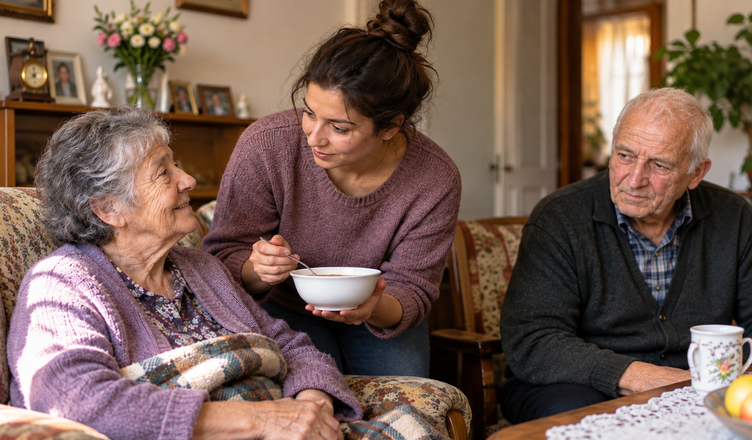
His parents, Margaret and Robert, had always been independent. They lived in the same modest house where Daniel had grown up, tended a small garden, and rarely asked anyone for help. But age slowly changed the rhythm of their lives. Robert developed problems with his mobility, while Margaret began struggling with everyday tasks that had once seemed effortless.
At first, Anna simply helped when she could.
She picked up groceries on her way home from work, drove them to medical appointments and prepared meals when Margaret was too tired to cook. She never considered these things extraordinary. They were Daniel’s parents, and she treated them as she hoped someone would one day treat her own family.
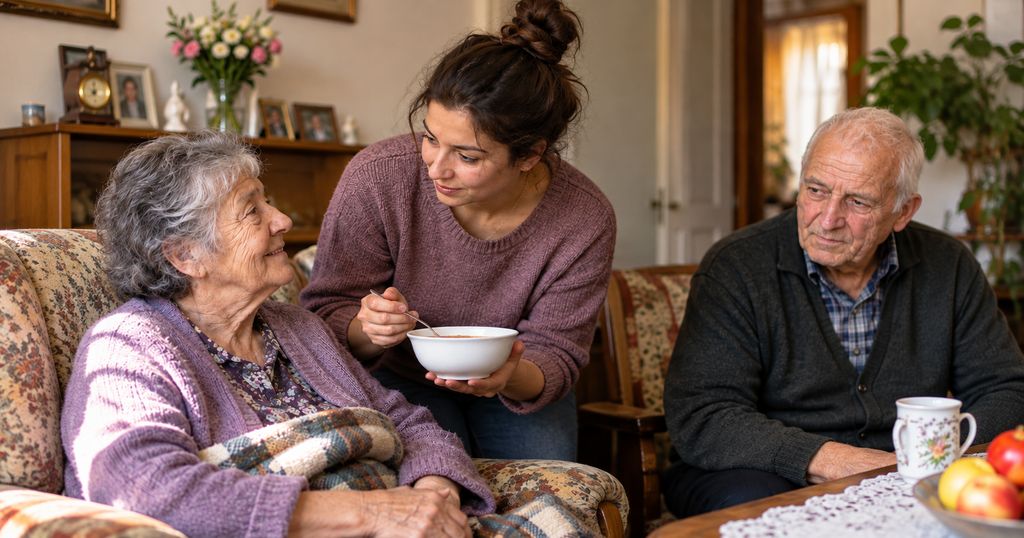
But occasional help gradually became a responsibility that shaped her entire life.
When Robert could no longer safely manage the stairs, Anna helped reorganize the downstairs rooms. When Margaret needed regular assistance, Anna adjusted her work schedule. She learned which medications had to be collected, which bills needed attention and which foods Robert could no longer eat.
There were countless small acts that nobody noticed.
A phone call in the middle of a busy afternoon. A cancelled weekend because someone was unwell. An hour spent waiting at a pharmacy. Laundry carried downstairs. A refrigerator quietly filled before anyone realized it was empty.
Daniel helped when he could, but his job required frequent travel. His siblings lived farther away and usually appeared during holidays or family celebrations. They would bring flowers, ask how their parents were doing and leave after a few hours.
Anna remained after everyone else had gone.
She never kept a record of what she did because she did not think love required one.
Years passed.
Then Robert died.
His death affected the entire family, but it changed Margaret’s life most dramatically. The woman who had once insisted on doing everything herself suddenly seemed uncertain inside the house she had shared with her husband for decades.
Anna’s responsibilities increased again.
She visited almost every day, made sure Margaret ate properly and spent evenings listening to stories she had already heard many times. Some nights Margaret talked about Robert. Other nights she simply wanted another person sitting in the room.
Anna stayed.
Eventually Margaret’s health declined further, and the family had to make difficult decisions about her care and finances. That was when something unexpected happened.
During one family discussion, Daniel’s older sister remarked that everyone had contributed equally over the years.
Anna initially said nothing.
Then another relative suggested that Anna had only «helped occasionally» and that the children had always been responsible for their parents.
The words surprised her.
She looked toward Daniel, expecting him to correct them immediately. He hesitated, apparently hoping to avoid an argument.
That hesitation hurt more than the accusation itself.
Anna calmly reminded the family of the years she had spent driving, cooking, cleaning and rearranging her own life around Margaret and Robert’s needs.
Instead of acknowledging it, several relatives became defensive.
«You make it sound as though nobody else did anything,» one of them said.
That was not what Anna had said at all.
But the conversation quickly stopped being about facts. It became about pride.
People remembered the birthdays they had attended but forgot the ordinary Tuesdays when Anna had been there alone. They remembered the expensive gifts they had bought but not the hundreds of small tasks that kept two elderly people comfortable in their own home.
For the first time, Anna understood something painful: sacrifice does not automatically create gratitude.
Sometimes people become so accustomed to receiving help that they stop seeing it as generosity. It becomes part of the background, something they assume will always be there.
Anna went home that evening without shouting or demanding an apology.
For several days, she thought carefully about what had happened.
She could have produced receipts, appointment records and messages proving how much she had done. She could have listed every cancelled plan and every emergency visit.
Instead, she chose a different response.
At the next family gathering, Anna placed a folder on the table. Inside were Margaret’s medical information, important telephone numbers, schedules, household details and everything someone would need to manage her daily care.
Daniel looked at her in confusion.
«What is this?» he asked.
Anna answered quietly.
It was everything the family needed to continue caring for Margaret.
She explained that she loved her mother-in-law and would never abandon her in an emergency. But from that day forward, the responsibility would belong to the people who insisted they had always shared it equally.
There was no dramatic speech.
No revenge.
No raised voices.
Anna simply stopped carrying a burden that everyone claimed had never been hers.
The effect was immediate.
Within days, relatives began discovering how much invisible work had been happening around them.
Someone had to arrange transportation.
Someone had to collect prescriptions.
Someone had to check the refrigerator.
Someone had to answer late-night telephone calls.
Someone had to remember appointments, deal with paperwork and notice when Margaret was having a difficult day.
Tasks that seemed insignificant individually became exhausting when combined.
A few weeks later, Daniel’s sister called Anna.
This time, her voice sounded different.
She did not offer an elaborate explanation. She simply admitted that she had not understood how much Anna had been doing.
Anna accepted the apology, but she did not immediately return to her old role.
That mattered.
Forgiveness did not mean pretending the previous conversation had never happened. Caring about Margaret did not require Anna to sacrifice herself indefinitely. And being a good person did not mean accepting disrespect simply to keep the family comfortable.
Eventually, the relatives created a schedule. Responsibilities were divided. Daniel became more involved, and his siblings began handling appointments and household needs themselves.
Anna still visited Margaret, but the visits changed.
She was no longer arriving with grocery bags, paperwork and a list of tasks.
Sometimes she simply brought tea and sat beside her.
For the first time in years, Anna could be a daughter-in-law again rather than an unpaid caregiver everyone had learned to depend on.
The experience left the family with a lesson that extended far beyond one household.
Much of caregiving is invisible.
It happens quietly, repeatedly and without applause. The person doing it may appear to be completing small tasks, but those tasks accumulate into hours, months and eventually years of responsibility.
That work deserves recognition before the person providing it reaches exhaustion.
Anna never needed a medal for helping Margaret and Robert.
She needed something much simpler.
She needed the people around her to see what she had done.
And when they refused to see it, she discovered that she did not have to convince them with arguments.
Sometimes the clearest answer is to stop doing the invisible work and allow others to finally understand its weight.